Butcher · Russian army soldier · deserter
Felix Smud
In Argentina everyone knew him as Felix Smud. In Russian Empire records he appears as Falik Zhmud, and in genealogical reconstructions as Yerakhmiel Falik. They are the same person.
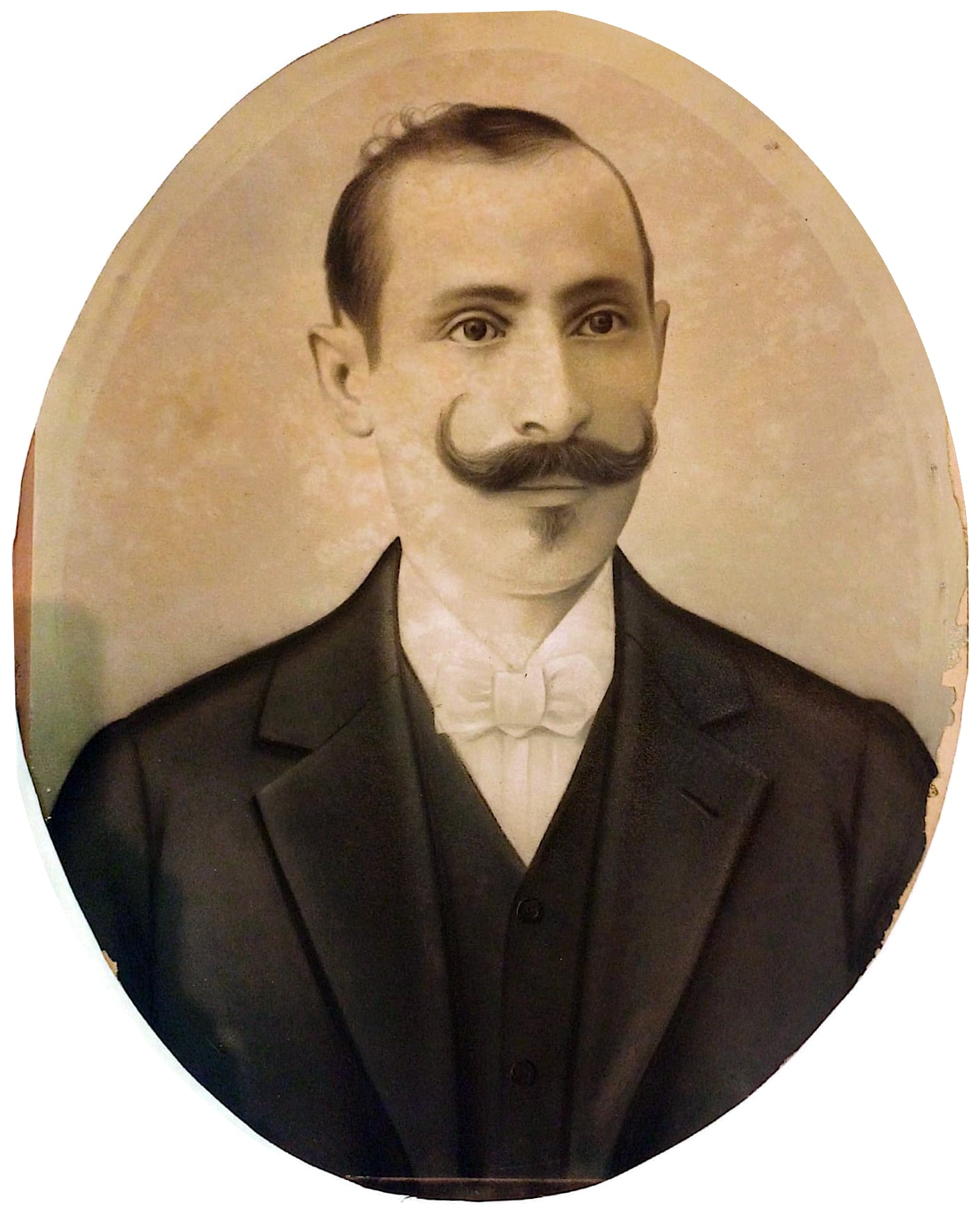
Documentedc. 1860/68 – c. 1909
He was born roughly between 1860 and 1868, probably closer to 1860. We do not have his birth record, and it is the piece most missed: without it we cannot fix the exact date or place. Everything else about him is fairly well established.
He was a butcher, or slaughterer. It is neither an isolated detail nor an anecdote: butchery was the Zhmood family’s trade. Reconstructions of the Jewish colonies of southern Ukraine record that the Zhmood brothers worked together in that line, and that a brother-in-law who married one of Felix’s sisters made his living with them in the same trade. When he reached Buenos Aires he went back to it: he found work as a butcher with the help of other immigrants from the same background who were already in the business. It was, quite literally, the trade he brought from home.
He served in the Russian army. During the war between Russia and Japan, in 1904 and 1905, he was mobilised, which is why he could not travel with his wife and children when they emigrated. His time in the army may have been longer than the war: Chaim Freedman’s reconstruction lists him as a soldier, not merely as mobilised. It is an open point, and worth keeping in mind when reading the dates attributed to him. When the war ended he was not discharged. He had promised Malke he would join her in Argentina, and to keep that promise he deserted. He reached Buenos Aires in mid-1905.
He died around 1909, about four years after arriving. He was a little over forty. The cause was tuberculosis contracted at the front, worsened by the strain of the war and the journey. He lived only a short time in the country he had deserted to reach. His three children were young: Alejandro was twelve, Marcos ten and Aida five.
Photographs
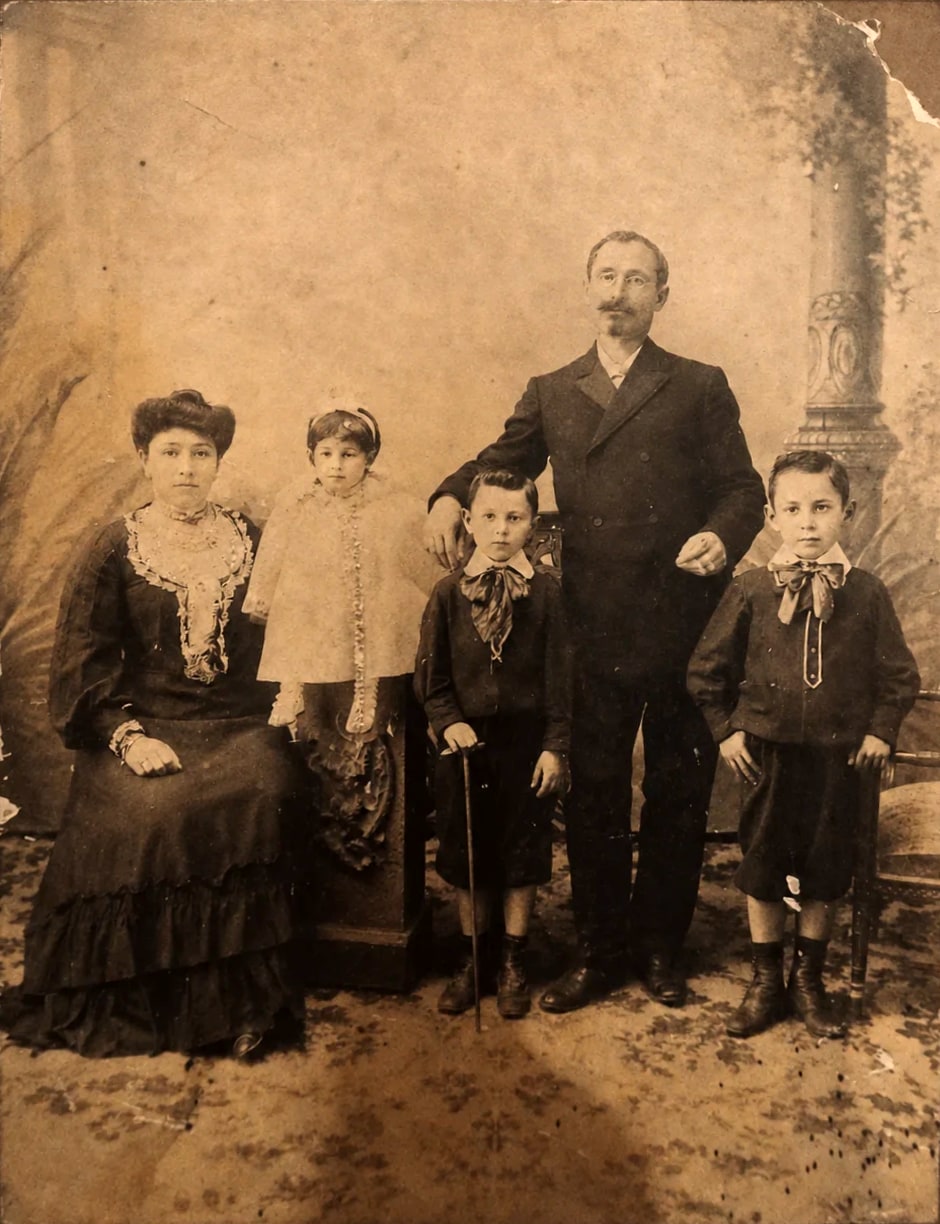
Felix Smud and Ester Malka with their childrenFelix Smud and Ester Malka with their three children: the girl is Aida; the two boys are Alejandro and Marcos (Meyer), though it is not known which is which. Undated. 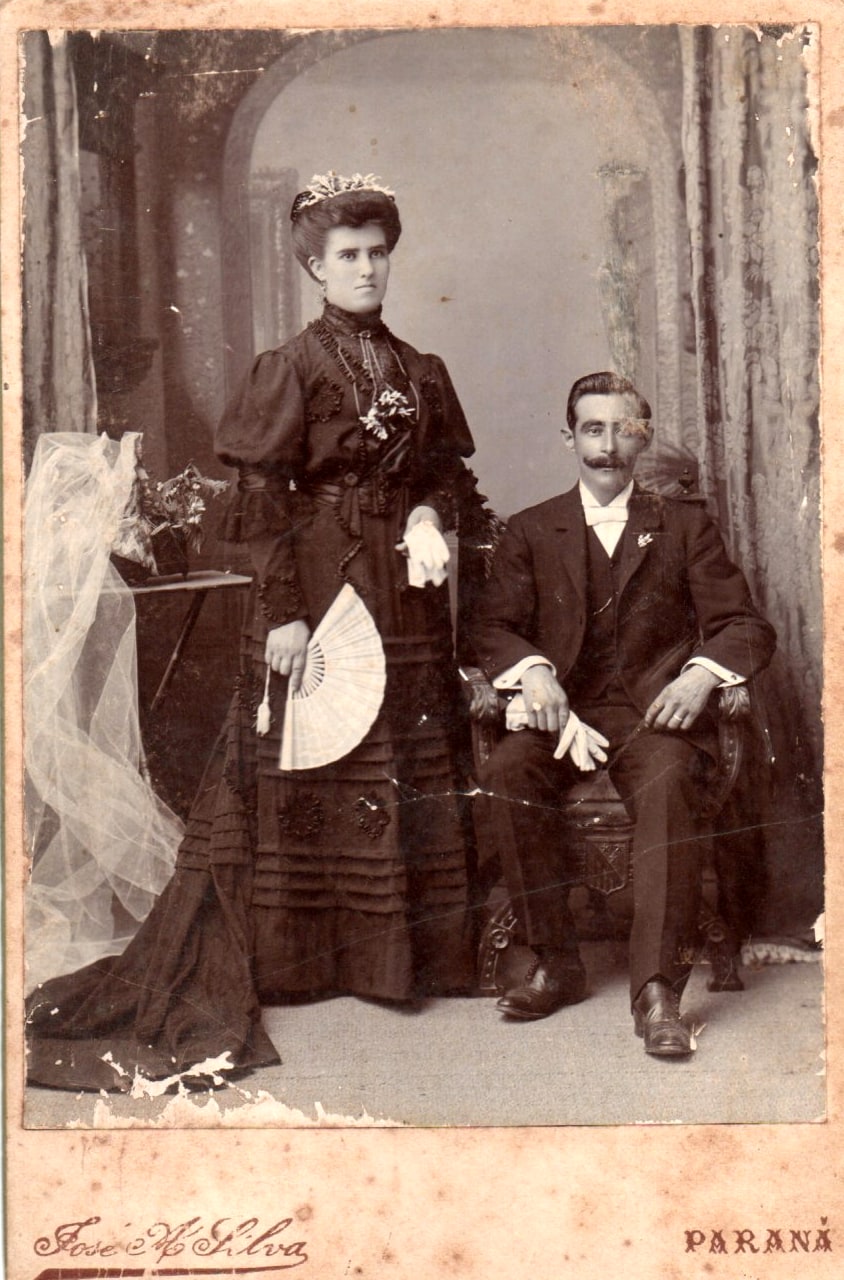
Felix Smud and Ester MalkaFelix Smud and Ester Malka (Malke Noel). The card mount bears the printed name of the studio, José M. Silva, and the city, Paraná. Undated.
In the timeline
- c. 1860/68
Felix is born
Felix is born, son of Koppel and Dvorka. We do not have his birth record: it is the largest gap in the research.
- c. 1896
Felix and Malke marry in Berdyansk
Felix marries Malke Noel in Berdyansk, a port on the Sea of Azov.
- 1899
The Mariupol birth record
On 25 January Meyer —later Marcos— is born, and his birth is recorded at the Mariupol synagogue. The record names three generations: the child, his father Falik and his grandfather Kopel.
- 1904
The war with Japan and Aida's birth
War breaks out between Russia and Japan and Felix is mobilised. In the last week of July, Eide —Aida— is born in Berdyansk.
- mid-1905
Felix lands
Felix lands in Buenos Aires. To keep his promise to join his family he had had to desert the army.
- c. 1909
Felix dies
Felix dies of tuberculosis contracted at the front. He was a little over forty and had been in the country for four years.