Crossed the Atlantic alone with three children
Malke Noel
Felix's wife went by many names: Ester Malka in her son's birth record, Malke or Molke in the family, María Esther Noel in Argentine papers. All of them are the same name.
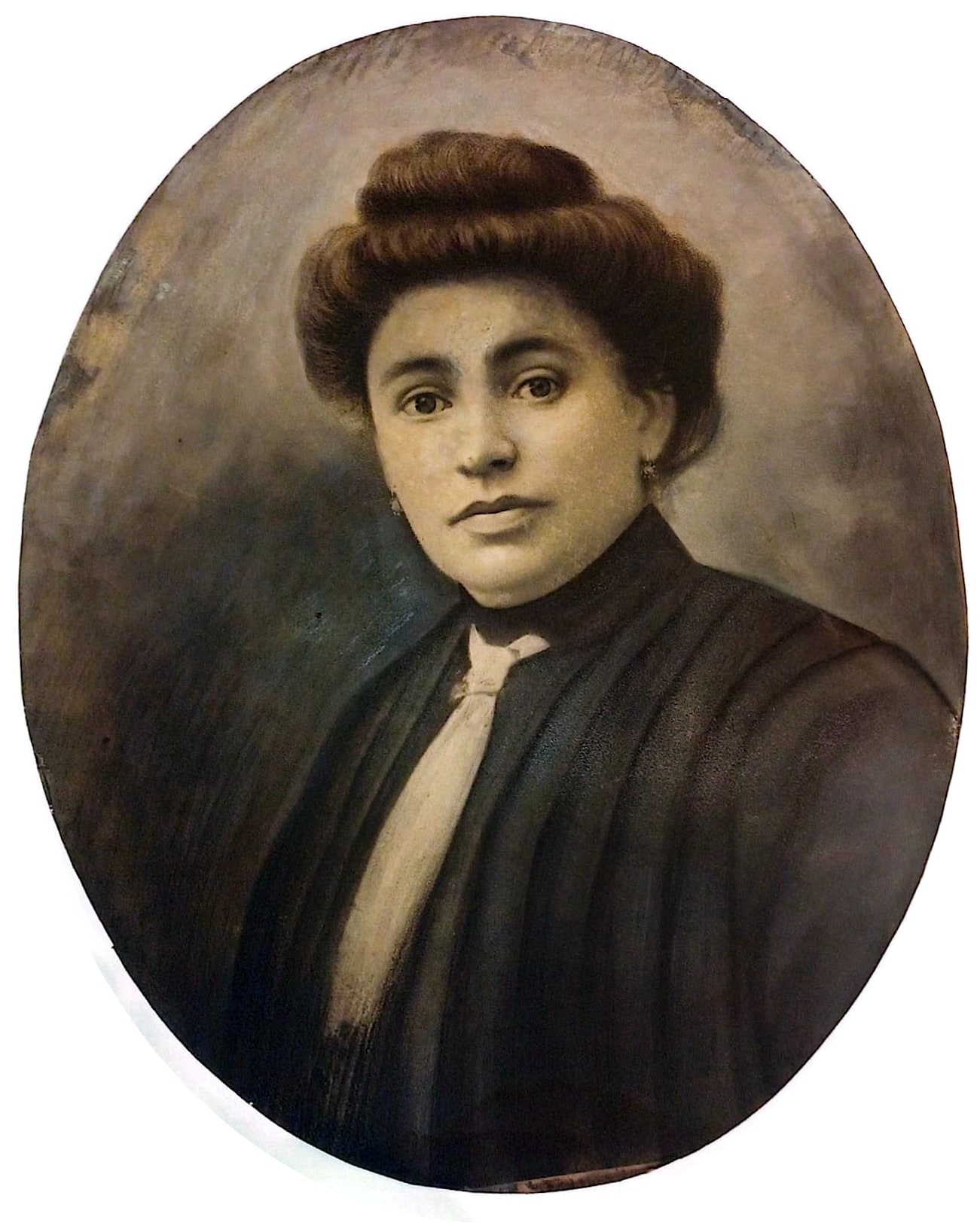
Documentedc. 1874 – c. 1915
We know little about her family, and almost all of it from oral tradition. The one exception is her father: her son’s 1899 birth record names her as Ester Malka and names him, Meyer, without a surname. The child registered in that record was also named Meyer.
Malka means “queen” in Hebrew. That is why Malke was rendered interchangeably as María, as Reina or as Reina Esther, and also why the names María, Esther, María Esther and Felisa recur so often among her descendants.
She met Felix in Berdyansk and they married there around 1896. Berdyansk was a port on the Sea of Azov, with an active Jewish community and a great deal of trade. The family lived there, and Alejandro and Aida were born there.
She had been born around 1874, so she was considerably younger than her husband. In August 1904 she left Berdyansk alone with the three children —one of them a baby a few weeks old— and crossed half a continent to the port of Bremen.
After Felix’s death she remarried and had a fourth child, Julio, half-brother to Alejandro, Marcos and Aida.
She died around 1915, still young and before the end of the First World War. She saw her children grow up in Buenos Aires, but did not live to see them as adults.
Photographs
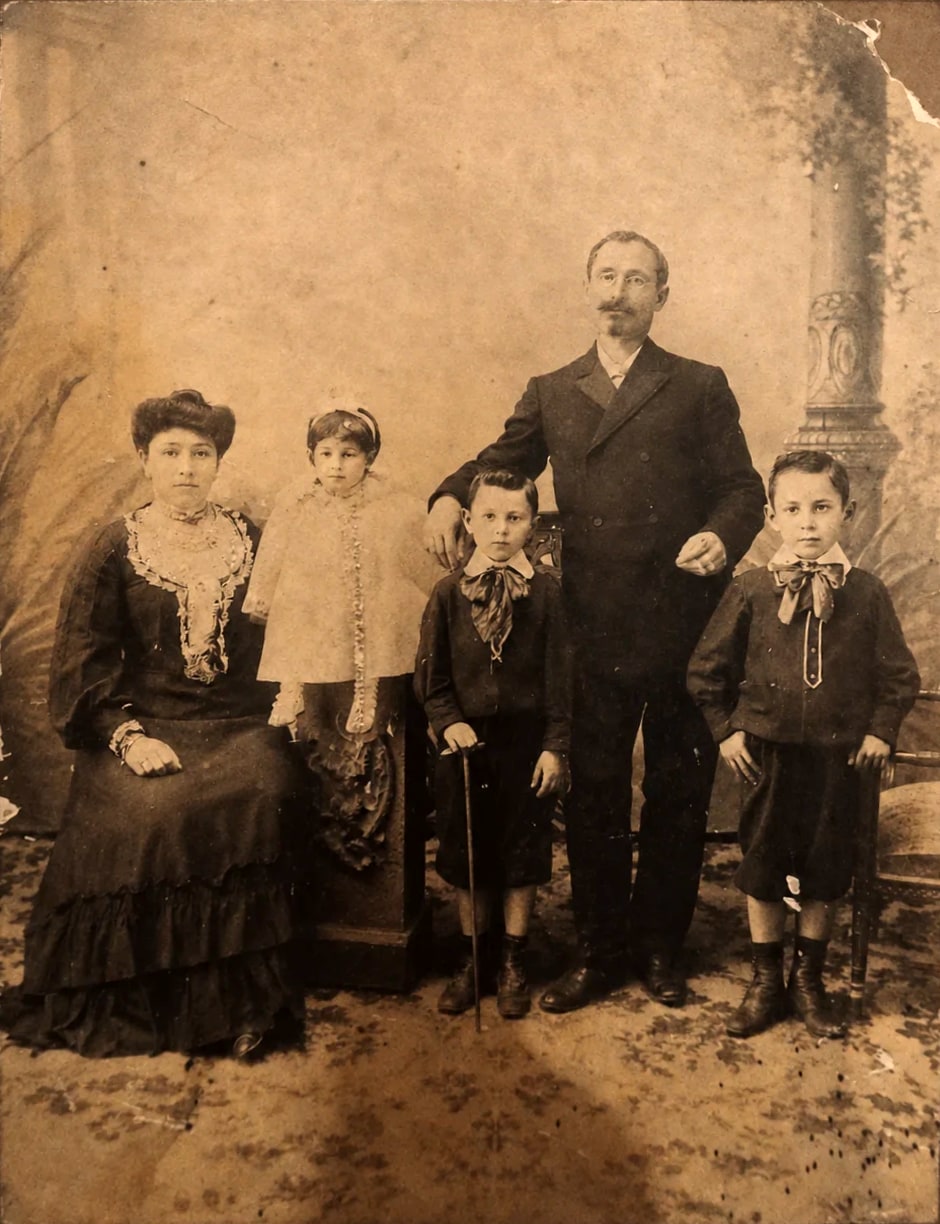
Felix Smud and Ester Malka with their childrenFelix Smud and Ester Malka with their three children: the girl is Aida; the two boys are Alejandro and Marcos (Meyer), though it is not known which is which. Undated. 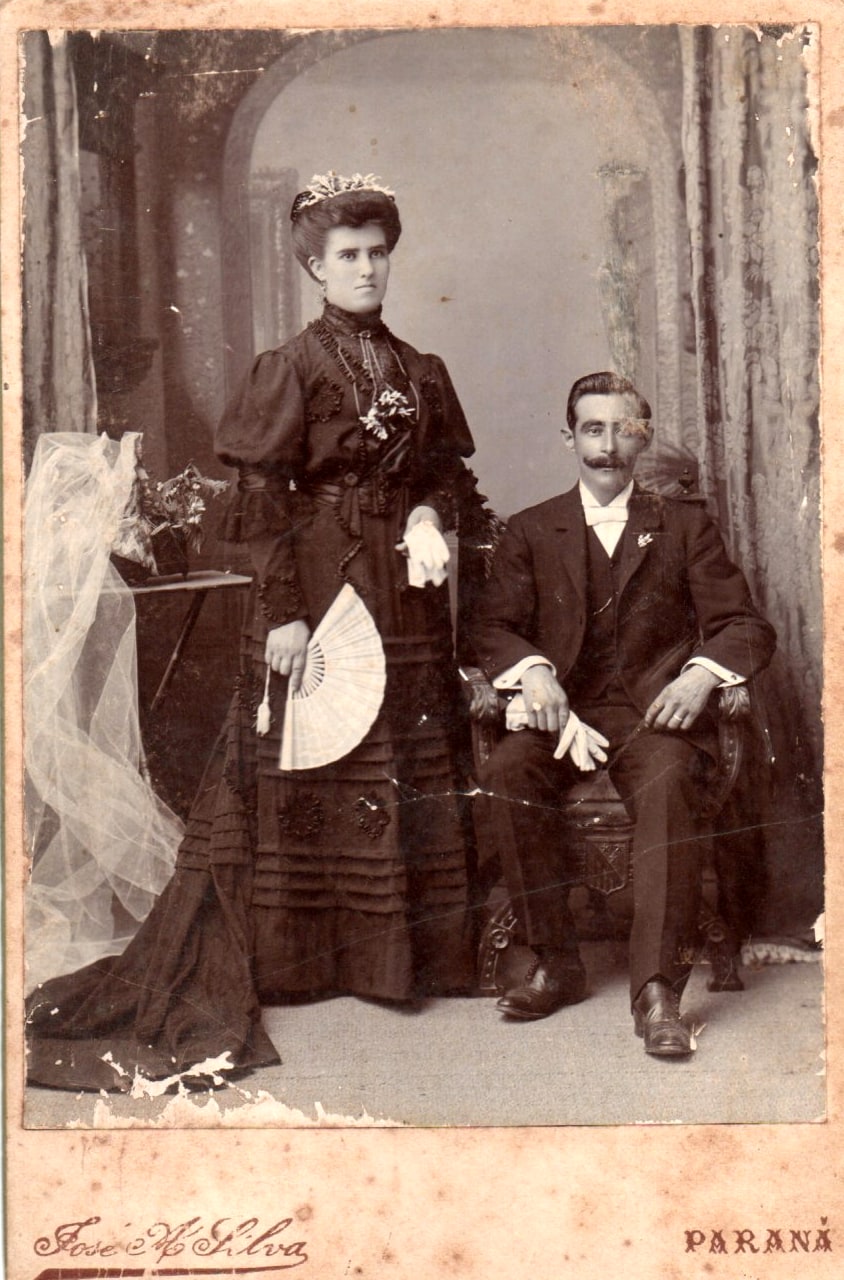
Felix Smud and Ester MalkaFelix Smud and Ester Malka (Malke Noel). The card mount bears the printed name of the studio, José M. Silva, and the city, Paraná. Undated.
In the timeline
- c. 1896
Felix and Malke marry in Berdyansk
Felix marries Malke Noel in Berdyansk, a port on the Sea of Azov.
- 1899
The Mariupol birth record
On 25 January Meyer —later Marcos— is born, and his birth is recorded at the Mariupol synagogue. The record names three generations: the child, his father Falik and his grandfather Kopel.
- August 1904
Malke leaves Berdyansk with the three children
Malke leaves Berdyansk with the three children. They cross southern Russia and central Europe to the port of Bremen, by cart and probably by train for some stretch.
- October 1904
Sailing from Bremen on the Borkum
They sail from Bremen in third class. The ship crosses the Atlantic, calling at Lisbon, the Canary Islands, Bahia, Rio de Janeiro and Montevideo.
- 23 December 1904
The ship docks in Buenos Aires
The ship docks in the port of Buenos Aires before dawn. In the immigration register the surname is written “Smud or Smod”.
- c. 1908
Malke returns to Russia with Aida
Four years after crossing the Atlantic, Malke went back to Russia with Aida, presumably to visit relatives. The only trace of that trip is a photograph from 1908, taken on their return, in which she sits with the three children.
- c. 1915
Malke dies and the siblings move to Entre Ríos
Malke dies. The three siblings —Alejandro, Marcos and Aida— move to the province of Entre Ríos.